800G Optics: OSFP vs QSFP-DD, and When AOC or DAC Beats Transceivers
AI clusters changed interconnect economics: a single GPU server now wants more bandwidth than a whole enterprise row did five years ago, and cabling is suddenly 10-15% of pod cost. The 800G generation gives you four ways to move the same bits — DAC, AOC, SR8 multimode and DR8 single-mode, in two form factors. Choosing per-link instead of per-habit routinely saves six figures per pod. Here's the complete decision.
How 800G Works: 8×100G PAM4
Every current 800G interface is 8 electrical lanes of 106.25 Gb/s PAM4 (100G payload + FEC overhead). PAM4 packs 2 bits per symbol by using 4 amplitude levels — halving symbol rate but shrinking eye height by 3×, which is why KP4 forward error correction is mandatory and why every optical reach number assumes FEC-corrected performance. The optics either map lanes 1:1 onto 8 fibers/wavelength paths (SR8, DR8) or regroup them (2×400G). The electrical side is identical across form factors — which is why the form-factor choice is thermal and mechanical, not electrical.
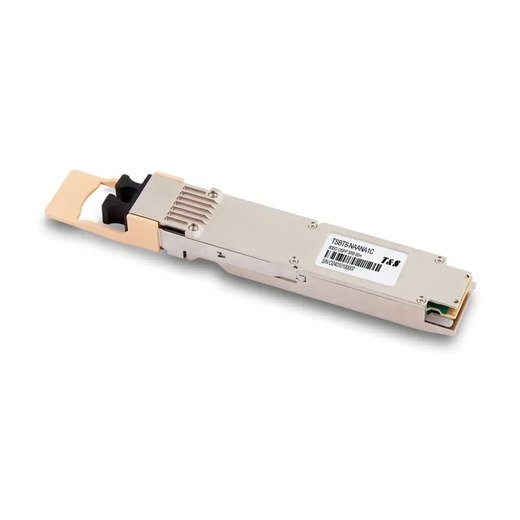
OSFP vs QSFP-DD, Properly Compared
| OSFP | QSFP-DD800 | |
|---|---|---|
| Size | Slightly larger (22.58 mm wide) | QSFP footprint (18.35 mm) |
| Thermal capacity | 16-20 W+ (integrated/riding heatsink options) | ~14-17 W with cage heatsink |
| Backward compatibility | None (new cage) | Accepts QSFP28/QSFP56 with adapter behavior |
| Who standardized on it | NVIDIA/InfiniBand & AI Ethernet fabrics | Cisco/Juniper/Arista enterprise platforms |
| Variants | Finned vs flat top (chassis-dependent!) | Type 1/2 lengths |
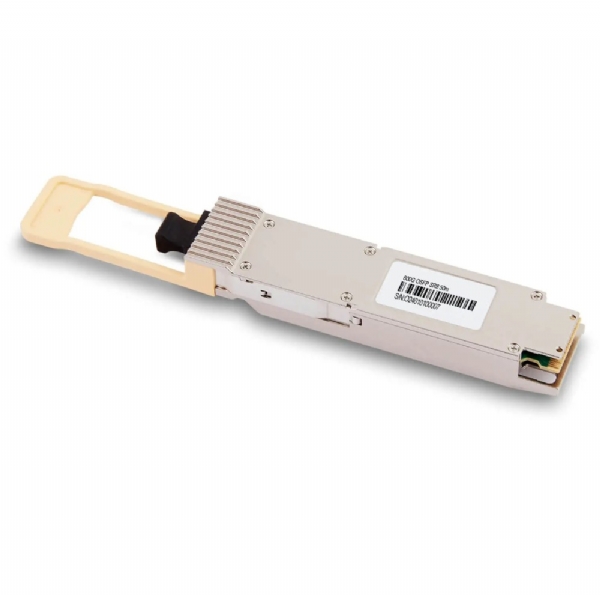
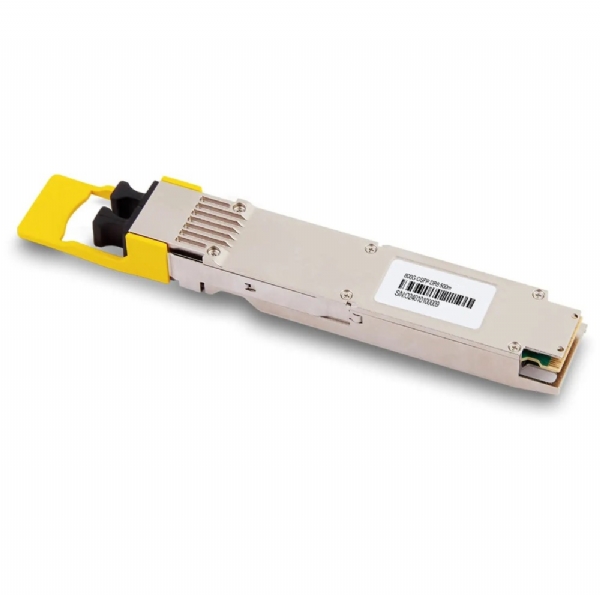
The practical rules: your switch decides the form factor, not you — check finned vs flat on OSFP (a finned module won't seat in a riding-heatsink cage); and in mixed shops, the pages for our OSFP SR8 and QSFP-DD SR8 cross-jump via the form-factor chip so ordering both sides stays coherent.
SR8 vs DR8 vs 2×DR4: Reach Classes
| Optic | λ / fiber | Reach | Media | Role |
|---|---|---|---|---|
| SR8 (802.3db) | 850 nm VCSEL ×8 | 30 m OM3 / 50 m OM4 | 2×MPO12 or MPO16 APC | In-row GPU fabric |
| DR8 (802.3df) | 1310 nm SiPh ×8 | 500 m (2 km opt.) | 2×MPO12 SMF | Row-to-row, spine |
| DR8 as 2×400G-DR4 | 1310 nm | 500 m | SMF | Feeding two 400G DR4 switches |
| 2×FR4/LR4 classes | CWDM4 ×2 | 2/10 km | Duplex ×2 | Campus/DCI — on request |
DAC vs AOC vs Transceivers
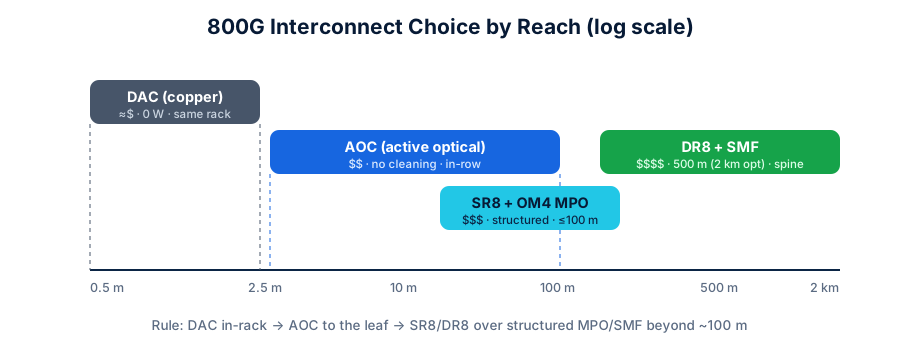
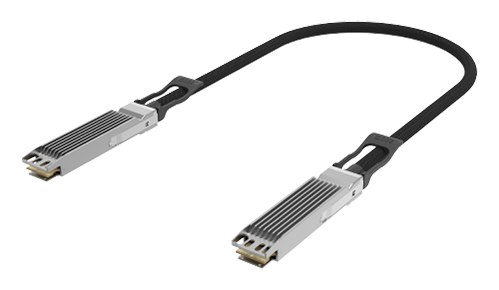
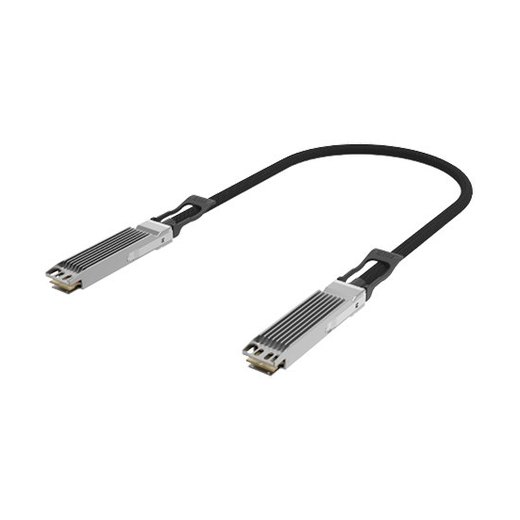
DAC (passive copper twin-ax): ~0 W, lowest cost, wire-speed latency; dies at ~2.5 m at 800G. Inside a rack there is no reason to buy anything else — see 800G OSFP DAC / QSFP-DD DAC.
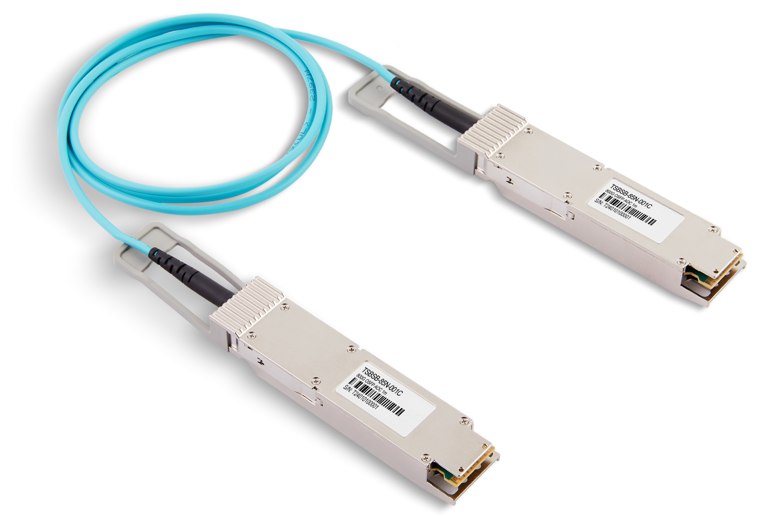
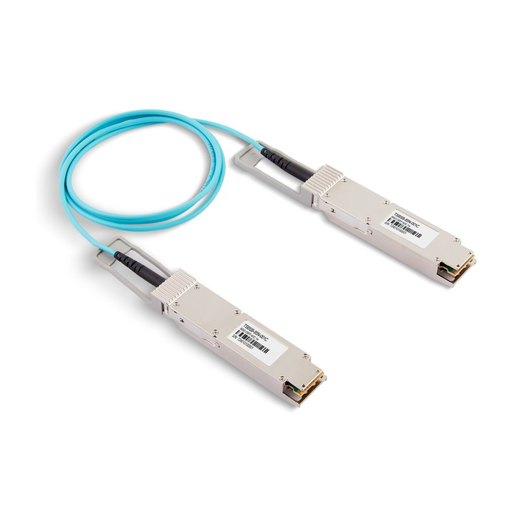
AOC (active optical cable): optics permanently bonded to the fiber, 1-100 m. No connector cleaning ever, no transceiver compatibility matrix, lower combined power than two pluggables, and the failure domain is one cable. The in-row default: 800G OSFP AOC, 400G QSFP-DD AOC.
Transceivers + structured cabling: the only choice beyond 100 m, and the right choice wherever plant outlives platforms — trunks stay when switches upgrade. SR8 over OM4 MPO trunks to 100 m; DR8 over single-mode trunks to 500 m; commission with an MPO loopback.
Breakout Topologies
800G ports often feed slower devices, and every family has a breakout member: 800G→2×400G AOC (one spine port, two 400G leaves), 400G→4×100G DAC (one leaf port, four QSFP56 NICs), 400G→8×50G AOC for dense server attach. Each leg negotiates independently — partial population works, and one leg's failure leaves the others up. The switch port must be configured for breakout mode; that's the #1 "dead breakout" cause, not the cable.
Compatibility Coding & DDM
Every FOT 800G module and cable end is EEPROM-coded per target platform (NVIDIA/Mellanox, Arista, Cisco, Juniper, or open/generic) — specify per end on breakouts, mixed coding is routine. All optics carry full DDM/DOM (per-lane Tx/Rx power, bias, temperature) which your NOS reads live; watching per-lane Rx power during bring-up catches dirty MPO positions in minutes (lane-mapping details in the polarity guide). BER is verified end-to-end on every assembly before shipment; 3-year warranty across the line.
A Worked AI-Pod BOM
32 GPU servers (8 NICs each) + 8 leaf + 4 spine, typical distances:
| Link class | Qty | Product | Why |
|---|---|---|---|
| NIC → leaf, ≤2 m in-rack | 256 | 400G DAC | Zero watts × 256 ports pays for itself in PDU capacity |
| NIC → leaf, adjacent racks 3-15 m | 64 | 400G AOC | No cleaning, quick swap |
| Leaf → spine, 20-60 m | 64 | 800G AOC or SR8+trunk | AOC if topology is stable; trunks if the row will re-shape |
| Spine → agg/DCI, 100-500 m | 16 | DR8 + SMF trunk | Only class that reaches; 2×DR4 optionality |
The pattern generalizes: copper until it can't, AOC until structure matters, transceivers where plant is permanent.
1.6T and What to Cable Now
1.6T (16×100G and early 8×200G lanes) arrives on OSFP-XD and next-gen OSFP — meaning today's fiber plant is the durable investment, not today's modules. Base-16 APC MPO trunks and single-mode spine cabling both carry forward; multimode SR reach shrinks each generation, so keep MM runs short and conservative. Cable the plant for two module generations; buy modules for one.
FOT 800G Portfolio
Transceivers: SR8 / DR8-2×DR4 in both form factors. Cables: AOCs, DACs, full breakout families. Plant: Type-B MPO trunks, Base-16 harnesses, loopbacks. Every product page cross-links its AOC↔DAC and OSFP↔QSFP-DD counterparts — compare in one click, and your selected options travel into the quote automatically.