The short answer
A UPC ferrule is polished flat with a slight dome so the fibre cores touch. An APC ferrule is polished at an eight-degree angle. That is the entire physical difference, and it changes return loss by roughly ten decibels.
It also creates the single most damaging connector mistake in fibre work. An angled face cannot seat against a flat one: the cores never touch, the loss is enormous, and forcing them together damages both. The green and blue colour coding exists to make this visible before it happens.
What Is UPC (flat)?
Ultra physical contact: a flat, dome-polished end face. Return loss is typically 50 dB or better on single-mode and 30 dB on multimode. Blue housing by convention.
It is the conventional choice for multimode throughout, and for a great deal of legacy duplex single-mode plant. Reflected light travels straight back down the core toward the transmitter, which was acceptable when links were slower and lasers less sensitive to feedback.
What Is APC (8° angled)?
Angled physical contact: the end face is polished at eight degrees, so reflected light is deflected into the cladding rather than back down the core. Return loss is 60 dB or better. Green housing by convention.
It is specified for single-mode parallel optics such as DR4 and DR8, for PON, and for anything coherent or analogue, because those systems are far more sensitive to reflection. See the glossary entry.
APC vs UPC
The return loss row is the reason APC exists. The colour row is the reason installations survive.
| UPC (flat) | APC (8° angled) | |
|---|---|---|
| End face | Flat, dome-polished | Angled 8° |
| Return loss, single-mode | ≥ 50 dB | ≥ 60 dB |
| Insertion loss | Comparable — polish does not change IL materially | Comparable |
| Housing colour | Blue | Green |
| Typical use | Multimode; legacy duplex single-mode | Single-mode parallel, PON, coherent |
| Required by | Most multimode standards | DR4, DR8, PSM4, PON, analogue |
| Mates with the other type | No | No |
| Cost | Slightly lower | Slightly higher |
Insertion loss is essentially the same for both — this is worth stating because it is a common misconception that APC is 'better' in general. It is not better on loss. It is better on reflection, and only on reflection.
Where reflection matters, it matters a great deal. In a parallel optic with four or eight lanes sharing one ferrule, reflections from several lanes add up, and in a coherent system, where information is carried in the phase, reflected light is directly destructive. That is why the standards mandate APC rather than merely recommending it.
Which One Should You Choose?
Multimode plant: UPC at 40G/100G — but check the datasheet at 400G+
For 40G and 100G SR optics, UPC is the convention and there is no reason to deviate. Return loss requirements are modest at 850 nm, and APC multimode components are harder to source and offer no practical benefit for SR-class optics.
Single-mode parallel optics: APC, without exception
DR4, DR8 and PSM4 are specified with APC and the reason is real. Order the trunks, the cassettes, the adapter plates and the jumpers as APC together — a single UPC adapter plate in an otherwise APC channel will stop the link and take an afternoon to find.
Single-mode duplex: pick one and enforce it
For duplex single-mode at LR4 or CWDM4, either polish works. What matters far more than the choice is consistency. Decide at design time, write it into the standard for the site, and specify it on every purchase order. Mixed-polish estates generate a steady trickle of faults forever.
Anything coherent, PON or analogue: APC
These systems are reflection-sensitive by nature. If you are running 400ZR, a PON access network or RF-over-fibre, APC is not optional.
Frequently Asked Questions
What happens if I mate APC to UPC?
The angled face cannot seat against the flat one, so the cores are separated and misaligned. Insertion loss is severe and the link will not come up. Worse, the physical contact between an angled edge and a flat surface damages both ferrules, so you have now ruined two connectors, one of which may be on an expensive trunk.
Is APC lower loss than UPC?
No. Insertion loss is essentially the same. APC's advantage is return loss — roughly 60 dB against 50 — which matters for reflection-sensitive systems and not otherwise.
Can I get an APC-to-UPC adapter?
Hybrid patch cords exist with APC at one end and UPC at the other, and they are the correct way to cross between two plants. What does not exist is an adapter that lets you mate an APC connector to a UPC connector directly, because the geometry cannot be reconciled.
Why is APC green?
Purely convention, and a very useful one. Blue for UPC, green for APC, in connector housings and adapter bodies alike. Treat the colours as a safety system rather than as decoration, and specify them on every order.
Does multimode ever use APC?
Rarely. It exists for specialised reflection-sensitive multimode applications, but for SR-class data centre optics UPC is the convention and the components are far easier to obtain.
The Parts We Build
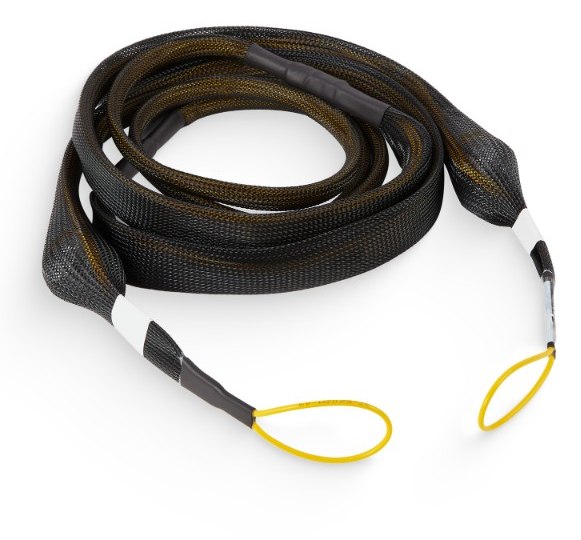
Every assembly we build is available in APC or UPC, with the polish printed on the label and the measured return loss in the test report.