400ZR vs ZR+ vs OpenZR+: Choosing Coherent Pluggables for DCI and Metro
Coherent optics used to mean a chassis. A dedicated transponder shelf, its own power feed, its own management plane, and a price tag that made you think carefully about every wavelength. Then the OIF put 400G coherent into a QSFP-DD, and the economics of metro and data center interconnect changed permanently.
Today three variants share that form factor, they are frequently confused, and picking the wrong one either wastes money or leaves you with a link that will not close.

Why Coherent Went Pluggable
Direct-detect optics — the LR, ER and ZR-class modules most engineers grew up with — encode data as light on and off. Beyond roughly 80 km, chromatic dispersion and OSNR degradation make that approach impractical without regeneration.
Coherent detection recovers both amplitude and phase, which allows digital compensation of dispersion in the receive DSP. That is what buys the distance. Packing it into a pluggable meant the router or switch port becomes the transponder — you delete an entire layer of equipment.
The Three Variants
400ZR (OIF Implementation Agreement)
Fixed DP-16QAM, C-FEC with about 15% overhead, 400G only, roughly 15–18 W. The OIF agreement means genuine multi-vendor interoperability — a 400ZR module from supplier A links to supplier B. Designed for amplified point-to-point DCI up to about 120 km.
OpenZR+ (MSA)
Adds selectable modulation (16QAM / 8QAM / QPSK), sub-rates at 100/200/300G, and oFEC with stronger coding gain. Reach extends to roughly 300–480 km. Because it is MSA-based, interop is broad but not as tightly guaranteed as 400ZR.
ZR+ (vendor-extended)
Superset implementations pushing to 450–600 km. Excellent capability, but the further you get from a published agreement, the more you should validate both ends together before committing.
| Attribute | 400ZR | OpenZR+ | Vendor ZR+ |
|---|---|---|---|
| Defining body | OIF Implementation Agreement | OpenZR+ MSA | Vendor-specific |
| Line rate | 400G only | 100 / 200 / 300 / 400G | 100–400G, some 800G |
| Modulation | DP-16QAM fixed | 16QAM / 8QAM / QPSK | Selectable, extended |
| FEC | C-FEC (~15% overhead) | oFEC (stronger coding gain) | oFEC or proprietary |
| Typical reach | ~80–120 km amplified | ~300–480 km | 450–600 km+ |
| Power | ~15–18 W | ~18–22 W | ~20–25 W |
| Multi-vendor interop | Strong — the point of the IA | Generally good, validate | Assume none |
| Best fit | Point-to-point DCI | Metro, ROADM, mixed rates | Long regional spans |
FEC and Modulation: Where Reach Comes From
Reach is not magic. It comes from two levers.
Modulation order. DP-16QAM carries 4 bits per symbol per polarisation — spectrally efficient, but the constellation points sit close together, so it needs high OSNR. Drop to 8QAM or QPSK and you trade capacity for noise tolerance. That is why OpenZR+ can reach further at 300G than at 400G: it is not a different laser, it is a different constellation.
FEC strength. C-FEC (~15% overhead) is lighter and lower latency. oFEC carries more overhead and delivers several dB more net coding gain — and in an optical link, a few dB of margin translates directly into hundreds of kilometres.
Fiber Plant Requirements
This is where coherent links actually fail, and it has little to do with the module.
- Single-mode, and clean. G.652.D for most metro work. Every connector in the path contributes loss and, more dangerously, reflection.
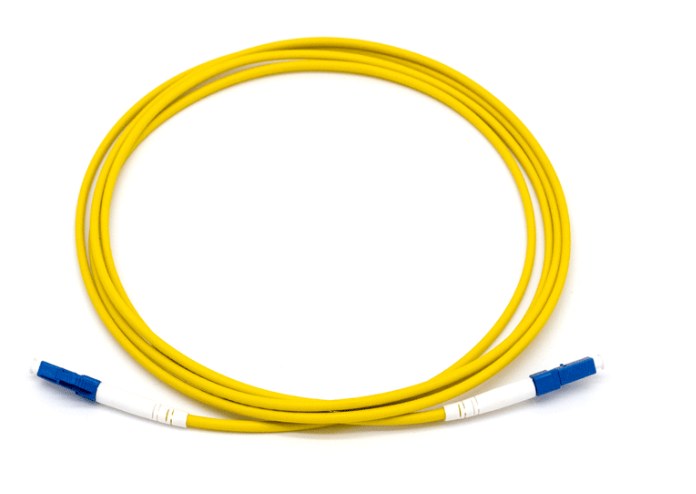
- APC everywhere you can. Coherent receivers are sensitive to reflected light. APC-polished cords give ≥60 dB return loss versus ≥50 dB for UPC. On a long amplified span that difference is not cosmetic. See our UPC vs APC guide for the physics.
- Know your span loss and your dispersion. The DSP compensates dispersion, not loss. Budget the link like any optical span: connector loss, splice loss, fiber attenuation, plus margin.
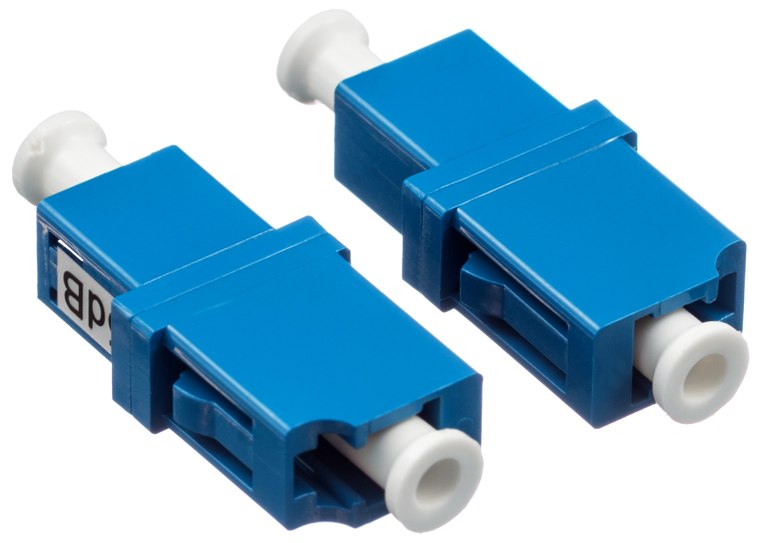
- Watch receiver overload on short spans. A 400ZR module designed for a 100 km amplified span, deployed across 2 km of dark fiber, can saturate its own receiver. That is what fixed attenuators are for — see our attenuator selection guide.
Working the Link Budget
Most coherent link failures are arithmetic that nobody did. The budget is not complicated — it is just usually skipped because the module datasheet quotes a distance and the distance sounds sufficient.

Work it in this order:
- Fiber attenuation. Use measured dB/km, not the 0.20 nominal. Aged plant with repair splices routinely runs 0.22–0.25 dB/km at 1550 nm.
- Mated connector pairs. Count every one — patch panel, cross-connect, the two at the modules themselves. Budget 0.3 dB each unless you have measured better.
- Splices. 0.1 dB each for fusion, and count the repair splices your OTDR trace shows rather than the ones the as-built drawing shows.
- Passive mux/demux. A DWDM mux/demux pair typically costs 6–8 dB round trip. This is often the largest single line item after the fiber itself, and it surprises people.
- Margin. 2–3 dB for ageing and future repairs. If you spend this at commissioning, the first cable cut that adds a splice takes the link down permanently.
Compare the total against the module's optical budget — launch power minus receiver sensitivity. If the total exceeds it, your options in ascending order of cost are: drop to a sub-rate with a lower-order constellation, remove connector pairs, or add amplification.
Three Ways It Gets Deployed
The same module lands in three quite different network contexts, and the surrounding plant — not the optic — decides which one is available to you.

Point-to-point IP-over-DWDM is the case that made coherent pluggables famous: two routers, dark fiber, no transponder shelf, no optical line system, no separate NMS. If you own or can lease the fiber, this is the cheapest 400G-over-distance available.
Alien wave means dropping your ZR wavelength into someone else's DWDM line system. Technically straightforward, commercially and operationally not: the line-system owner has to accept a wavelength they do not manage, and fault isolation between two organisations is genuinely painful. Get the operational agreement in writing before you get the optics.
ZR+ through a ROADM is where longer reach lives. You gain amplification, filtering and wavelength routing; you take on an optical layer to design and operate. This is a transport engineering exercise, not a cabling one — but the fiber discipline in the sections above still applies, and matters more, because you now have more spans in which to lose margin.
Amplified vs Unamplified
400ZR's headline 120 km assumes amplification. Unamplified, you are working against a total loss budget in the low-to-mid teens of dB — realistically 40–80 km on good fiber with few connectors.
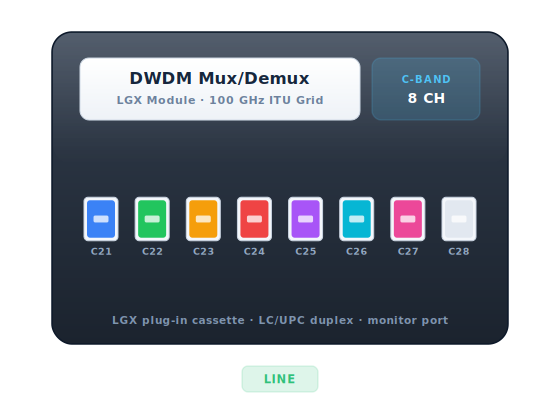
If you are building a metro ring rather than a point-to-point pair, you also need to think about the DWDM mux/demux in the path. Every passive multiplexer adds insertion loss, and channel plans have to match the module's tunable grid.
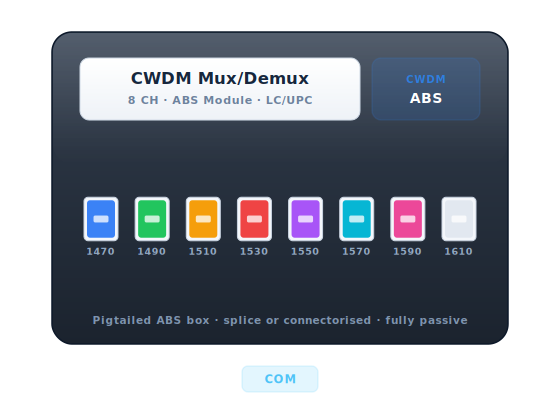
One planning note on channel plans: coherent pluggables are tunable across the C-band, usually on a 50 GHz or flexible grid. If your existing plant is a fixed CWDM system, the coherent module cannot join it — CWDM's 20 nm spacing is a different world from the C-band grid these modules tune within. Mixing the two means two separate optical layers on the same fiber pair, which is possible but needs deliberate design.
Power, Cages and the Thermal Question
A 400ZR module draws roughly 15–18 W; ZR+ implementations with stronger FEC and higher-power optics run higher still. That is a lot for a QSFP-DD cage originally specified around much lower power classes.
Consequences worth checking before you order:
- Not every QSFP-DD port can host a coherent module. Many platforms support them on a subset of ports only, or de-rate the number of simultaneously populated coherent ports. This is in the switch documentation, not the module's.
- Ambient matters more than you expect. A module qualified to 70 °C case temperature in a 25 °C room may be marginal in a 35 °C hut with a failed fan tray.
- OSFP variants exist for a reason. Where a platform offers coherent in OSFP, the extra thermal envelope is generally worth taking.
A Decision Sequence
- Measure the span first. Actual fiber loss, actual connector count, actual distance. Not the map distance.
- Under 120 km, amplified, both ends yours? 400ZR. Cheapest, lowest power, guaranteed interop.
- Metro ring, ROADM in path, or multi-vendor? OpenZR+. The sub-rates and oFEC give you room to manoeuvre.
- Beyond 480 km? Vendor ZR+ — and validate both ends as a pair before you commit.
- Then fix the plant. APC connectors, clean end-faces, attenuators where the receiver would otherwise overload. The module is rarely the reason a coherent link underperforms.
FAQ
Can I mix 400ZR from two vendors?
Yes — that is the point of the OIF Implementation Agreement. For OpenZR+ interop is generally good but worth validating. For vendor ZR+, assume you cannot unless proven.
Do I need a DWDM mux for a single coherent link?
No. Point-to-point over dark fiber works with just the two modules. You need a mux when multiplexing several wavelengths onto one fiber pair.
UPC or APC for coherent?
APC wherever practical. The reflection sensitivity of coherent receivers makes return loss a real design parameter rather than a specification detail.
Why does my 400ZR link work at 300G but not 400G?
Almost certainly OSNR. 400G needs 16QAM; 300G can use 8QAM, which tolerates several dB less OSNR. That is a designed behaviour, not a fault.