DAC vs AOC vs Transceiver Pairs: A Cost-Per-Port Framework That Survives Audit
Every procurement cycle produces the same argument. Someone has a spreadsheet showing DAC is a fraction of the cost of transceivers, someone else points out that the DAC will be landfill in three years, and the decision gets made on whoever presented last. Here is a framework that holds up under scrutiny.

The Three Options
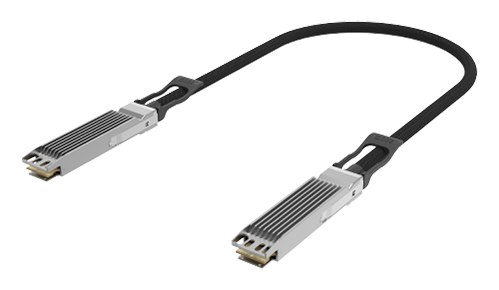
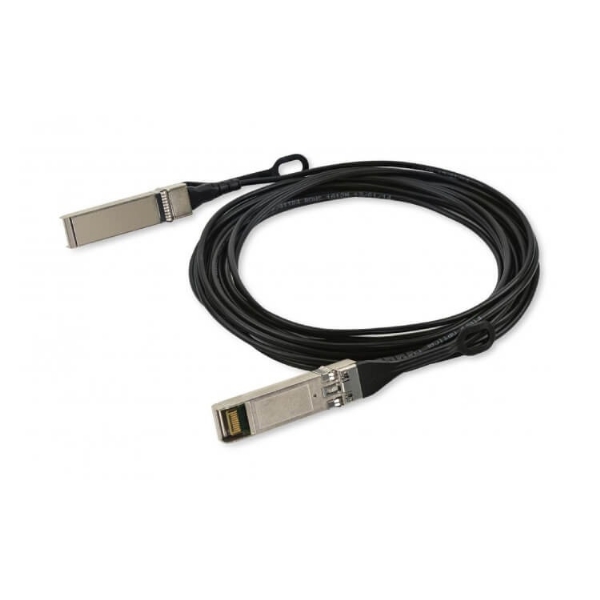
Passive DAC — twinax copper with connectors moulded on. No electronics in the data path. Around 0.1 W, zero added latency, cheapest per link, and it cannot fail in software.
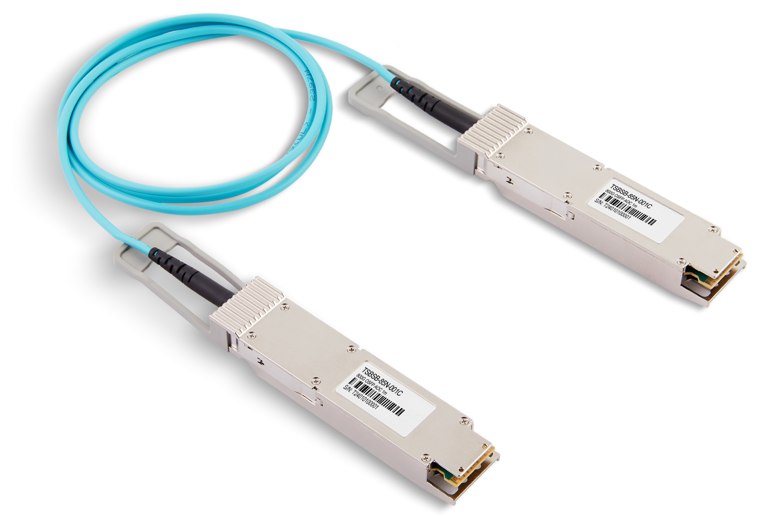
AOC — optical fiber with transceivers permanently attached at both ends. Around 14 W at 800G, reaches 30–100 m, and the optics are factory-mated so there are no end-faces to clean.
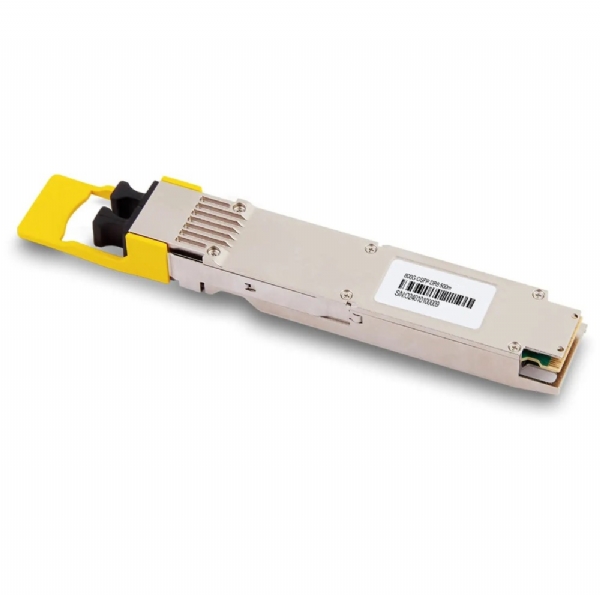
Transceiver pair plus structured fiber — two modules and a patch cord or trunk between them. Highest cost per link, but the modules and the fiber are independent assets with different lifecycles.
Distance Decides First
Before any cost conversation, place the link on the distance axis. This eliminates most of the argument.
| 0.5–3 m (in-rack) | Passive DAC. Nothing else is competitive. |
|---|---|
| 3–10 m (adjacent rack) | Active DAC or AOC. AOC if cable bulk or airflow is a constraint. |
| 10–100 m (same hall) | AOC, or transceivers over trunk if you will upgrade optics before recabling. |
| 100 m – 2 km | Transceivers over single-mode structured fiber. DR/FR class. |
| Beyond 2 km | LR/ER or coherent. See our coherent pluggable guide. |
Note what this table does not say: it never recommends a type because it is cheap. Cost only becomes decisive when two options both physically work.
Power Is Recurring Cost
The number that gets left out of most comparisons. At 800G:
- Passive DAC: ~0.1 W per link
- Active DAC: ~2–5 W per link
- AOC: ~14 W per end, so ~28 W per link
- Transceiver pair: ~14–17 W per end depending on reach class
Work an example. A 1,000-link fabric, AOC throughout, at roughly 28 W per link is 28 kW continuous. Add cooling at a PUE of 1.3 and you are drawing around 36 kW to run cables. Move the 400 in-rack links to passive DAC and you save close to 11 kW — every hour, for the life of the fabric.
That is the real reason hyperscalers care about in-rack copper. It was never mainly about the purchase price.
Three-Year Cost, Drawn Properly
Sticker price is one bar in a stack of four. Once power and cooling are drawn to the same scale, the comparison stops being controversial.

Read the figure as shape, not as quotes — the absolute numbers depend on your energy tariff and your PUE. What is robust across every set of assumptions we have tested:
- Passive DAC is not merely cheaper in-rack, it is a different order of magnitude, because two of its four cost bars are literally zero.
- AOC's power cost catches up with its hardware cost surprisingly fast. At typical commercial tariffs, three years of running an 800G AOC costs a meaningful fraction of buying it. Anyone comparing AOC to DAC on purchase price alone is understating the gap by roughly half.
- The transceiver path's extra cost is front-loaded and partly recoverable. The fiber plant bar is a one-time item that serves the next two optic generations. Amortise it across three refreshes and the comparison changes character entirely.
The Upgrade-Life Argument
Here is where the transceiver option earns its premium, and where DAC's low price can be misleading.
A DAC or AOC is a single asset with a single speed. When you go from 800G to 1.6T, every one of them is scrap. A transceiver-plus-trunk link is two assets: the modules are replaced, the fiber stays. Structured fiber has a 10–15 year service life across typically three optic generations.
So the honest comparison over a 10-year window is not "cable A costs less than cable B". It is:
- DAC/AOC path: purchase cost x 3 replacement cycles, plus power, plus the labour of pulling and re-running every cable each time.
- Transceiver path: module cost x 3 cycles, plus one fiber installation, plus power.
For short links the DAC path still wins comfortably — the cable is cheap and the runs are short. For anything crossing a rack boundary in a fabric you expect to upgrade, the arithmetic tightens fast, and installation labour is usually what tips it.
Failure Modes and Sparing
Different types fail differently, which changes what you stock.
| Passive DAC | Mechanical only — crushed cable, bent pin. Very low rate. Failure is total and obvious. |
|---|---|
| AOC | Optical or electrical at either end. Whole cable is replaced for a single-end fault. Hold 2–3% spares. |
| Transceiver pair | Single module replaceable. Contamination on end-faces is the most common issue and is fixable, not fatal. |
The sparing implication: AOC spares must be held per length and per coding, which multiplies SKU count. Transceiver spares are per type — far fewer line items for the same coverage.
The Framework
Six questions, in order. Stop at the first that gives a clear answer.
- How far? If under 3 m, passive DAC. Decision made.
- Will you upgrade speed before you next touch the cabling? If yes and the run is long, structured fiber.
- Is the path serviceable without disruption? If pulling a replacement means a maintenance window, favour structured fiber.
- What is your power budget? If constrained, push copper as far as it physically goes.
- How many SKUs can operations handle? AOC breeds SKUs. Transceivers plus standard cords do not.
- Only now, compare price. And compare over the asset life, not the purchase order.
Our line covers all three paths — passive DAC, AOC and 800G DR8 transceivers — with programmable vendor coding, so the decision can be made on engineering grounds rather than on what a supplier happens to stock.
What an Auditor Will Ask
If this decision is going to be reviewed — internally, by a customer, or by someone signing a capex request — five questions come up every time. Have the answers written down before you are asked.
- "What is the assumed service life, and where does that number come from?" Three years for optics and ten to fifteen for structured fiber are defensible industry norms. State them explicitly; do not let them stay implicit in a spreadsheet formula.
- "What energy price and PUE did you use?" Power is usually the second-largest line item and it is the one most often omitted. Show it separately so the reviewer can substitute their own tariff.
- "What is the installation labour assumption?" Re-cabling a rack is cheap; re-cabling a hall is not. If your comparison ignores labour, the DAC option will look better than it is on long runs.
- "How many SKUs does this create, and who manages them?" AOC generates a SKU per length per coding. That is an operational cost even though it never appears as a line item.
- "What happens at the next speed upgrade?" The honest answer for DAC and AOC is "we buy them again". That is often fine — but it should be a decision, not a discovery.
A comparison that answers these five holds up. One that presents a single cost-per-link number does not, no matter how carefully that number was calculated.
FAQ
Is AOC always more expensive than DAC?
Per unit, yes. Per deployed link at 10 m, often no — because the DAC alternative at that distance is an active DAC with retimers, which narrows the gap considerably.
Can I mix DAC and AOC in one fabric?
Yes, and you should. Match the cable to the hop. Uniformity is a procurement convenience, not an engineering virtue.
Does vendor coding affect price?
Not materially. It is an EEPROM programming step at manufacture. What it affects is whether the link comes up without a console session.
How do I compare quotes fairly?
Normalise to cost per port per year over the expected service life, and add the power. A cable that is 30% cheaper but scrapped two years sooner is not cheaper.