LPO vs CPO vs NPO: Which 1.6T Switch Architecture Should You Actually Cable For?
Three acronyms dominate every 1.6T switch conversation, and the marketing around them is unusually noisy. Strip it back and all three are answers to one physical problem: the electrical path between the switch ASIC and the optics is running out of budget.

The Problem All Three Are Solving
In a conventional pluggable switch, the ASIC drives a high-speed electrical signal across the PCB, through a connector, into a module cage at the faceplate. Inside that module, a DSP re-clocks and equalises the signal before it hits the laser driver.
That DSP is expensive in three ways: it costs money, it burns 4–8 W per module, and it adds latency. At 100G per lane the trade was acceptable. At 200G per lane, the electrical loss across that same PCB trace roughly doubles in dB terms, and the DSP has to work harder to compensate — so its power goes up exactly when the thermal budget is already breaking.
Each architecture attacks a different part of that chain.
LPO: Delete the DSP
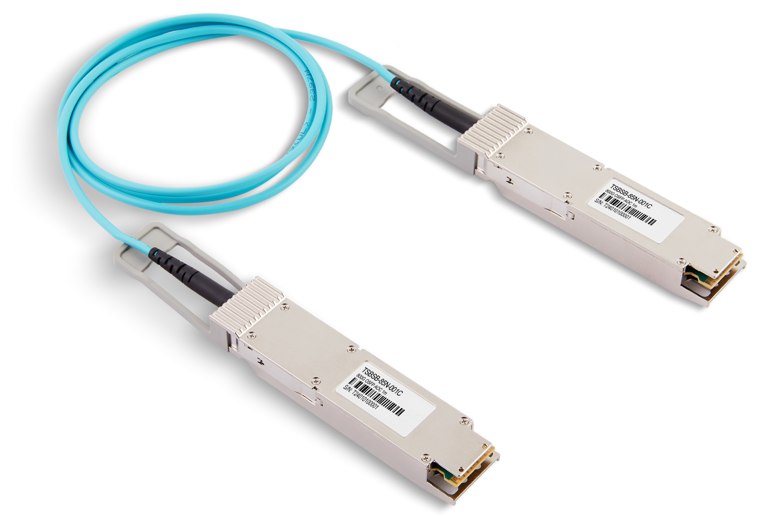
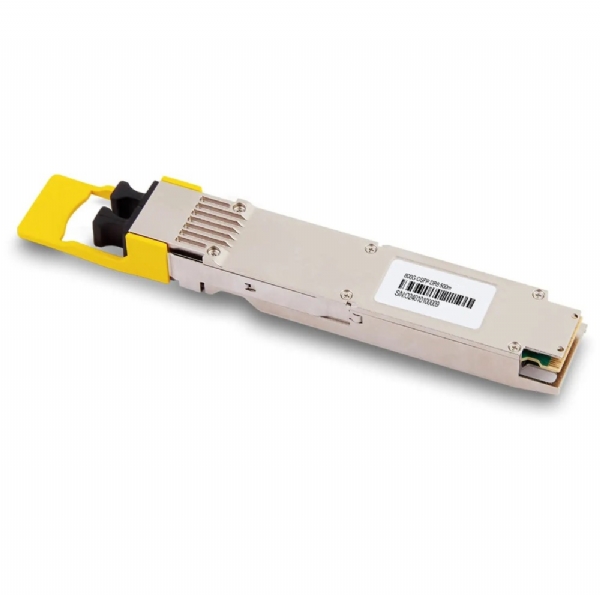
Linear Pluggable Optics keeps the module at the faceplate but removes the DSP, relying on the switch ASIC's own SerDes to drive the optics linearly. You keep the pluggable form factor and everything that comes with it — hot swap, mixed vendors, field replacement, standard cages.
What you gain: roughly 25–40% module power reduction, meaningfully lower latency, lower module cost.
What you give up: the DSP was doing real work. Without it, the link's tolerance for a marginal channel drops sharply. LPO demands tighter host board design and, crucially, tighter optical channel quality. A dirty connector or a lossy patch that a DSP-equipped module would have shrugged off can now take the link down.
Where the Watts Actually Go
The LPO argument only makes sense once you see the power breakdown inside a conventional module. It is not evenly spread.

Two things to take from that chart. First, the saving is large but it is bounded — you cannot LPO your way below the laser, driver and TIA, which together set a hard floor around 8–9 W at 800G. Second, the saving is not free margin: the DSP was buying you tolerance, and removing it hands that job to the host board and to your fiber.
There is a system-level consequence that rarely makes the slide deck. Because an LPO link is only qualified as a combination — this switch, this cable, this module — you lose some of the mix-and-match freedom that made pluggables attractive in the first place. In exchange you get roughly half the optical power and a few hundred nanoseconds back. Whether that is a good trade depends entirely on whether your operations model can live with a shorter compatibility matrix.
CPO: Move the Optics onto the Package
Co-Packaged Optics puts the optical engines on the same substrate as the switch ASIC. The high-speed electrical path shrinks from tens of centimetres to millimetres, which is the cleanest possible answer to the signal-integrity problem — reported optical interconnect power reductions run as high as 70%.
What you give up is serviceability, and it is a big give. The optics are no longer field-replaceable. A failed optical channel is a failed switch. That changes sparing strategy, RMA economics, and how you think about a fabric's failure domain. It also concentrates supply-chain risk: the ASIC and the optics come from one vendor, as one part.
Deployment reality in 2026: early, hyperscale-first, and mostly in fabrics where the operator can absorb whole-unit replacement.
NPO: The Pragmatic Middle
Near-Package Optics places the optical engine on the board immediately beside the ASIC rather than on its substrate. Most of the electrical-path benefit, but the engine remains a separable component. It is the least-discussed and arguably most-shipped of the three — several platforms marketed with CPO language are architecturally NPO.
Side by Side
| Dimension | LPO | NPO | CPO |
|---|---|---|---|
| Optics location | Faceplate, pluggable | Beside ASIC, on board | On ASIC substrate |
| Relative optical power | ~60% of DSP pluggable | ~40% | ~30% |
| Added latency | Very low | Very low | Lowest |
| Field serviceable | Yes — full hot swap | Engine replaceable | No |
| Failure domain | One module | One engine | Whole switch |
| Multi-vendor optics | Constrained to qualified pairs | Limited | None |
| Channel quality demand | High | Moderate | Moderate |
| 2026 maturity | Mature — most 1.6T volume | Transitional, shipping quietly | Early, hyperscale first |
How to Qualify an LPO Link
If you are deploying LPO, the acceptance test changes shape. A conventional pluggable either links or it does not, and a marginal channel shows up as a slowly rising corrected-error count you can live with for years. LPO removes that cushion, so you have to look for the margin explicitly rather than waiting for it to run out.
A workable acceptance sequence:
- Inspect and certify every end-face before first mating. IEC 61300-3-35 grading, both ends, no exceptions. This is the single highest-yield step.
- Measure channel insertion loss, do not assume it. Compare against the optic's budget with the LPO derating the vendor specifies — it is usually 0.5–1.0 dB tighter than the DSP-based equivalent.
- Record pre-FEC BER, not just link state. A link at 1e-5 pre-FEC and one at 1e-9 both show "up". Only one of them survives a hot aisle in August.
- Soak at temperature. Run the fabric warm for 24 hours and re-read the error counters. LPO failures are disproportionately thermal.
- Keep the baseline. Store the commissioning numbers. Six months later, the question is always "was it always like this", and only a baseline answers it.
What Changes in Your Cable Plant (Almost Nothing)
This is the reassuring part, and it is the reason this article exists on a cable manufacturer's site rather than a switch vendor's.
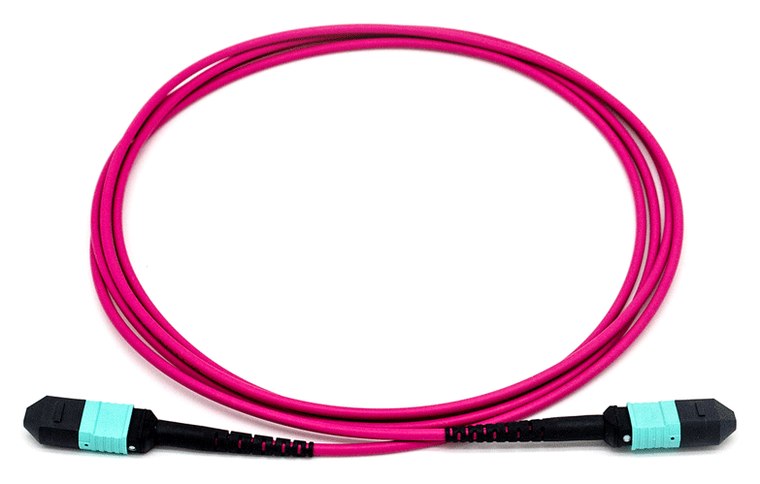
All three architectures terminate in the same fiber. LPO modules take MPO or duplex LC exactly like DSP pluggables. CPO switches present an external optical connector — typically MPO — fed from the co-packaged engine. The trunk, the patch panel, the cassette and the cords do not change.
What does change is how much your fiber quality matters:
- LPO reduces link margin. Insertion loss you could previously waste, you now cannot. Specify low-loss connectors and keep total channel loss well inside budget.
- CPO concentrates the connector count. Fewer, denser optical interfaces on the faceplate — often high-fiber-count MPO. Trunk fiber counts go up; connector types stay familiar.
- Cleaning discipline becomes load-bearing. With less electrical compensation in the path, contamination shows up as link flap rather than as a marginal error rate you can ignore.
What to Do This Year
- Cable for pluggables. They are the volume, and every other architecture presents the same fiber interface anyway.
- Do not pay a premium for "CPO-ready" cabling. There is no such thing as a CPO-specific trunk. MPO-16 single-mode or OM4 covers it.
- Tighten your loss budget targets. If you were designing to the edge of the standard, pull back. LPO deployments are where sloppy channels surface.
- Ask vendors which architecture they actually ship. "CPO-based" in a datasheet frequently means NPO. It matters for your sparing plan.
- Keep spares of whole switches for CPO fabrics. If the optics are not replaceable, the switch is the field-replaceable unit.
FAQ
Does LPO require special cables?
No. Standard MPO or duplex LC, same as any pluggable. What it requires is good cables — low insertion loss, clean end-faces, verified channels.
If CPO is so efficient, why is anyone still buying pluggables?
Serviceability and supply chain. A non-replaceable optic turns a $200 failure into a chassis swap, and it ties your optics to one vendor. For most operators that trade is not worth 70% of optical power today.
Will LPO work with any switch?
No. The host SerDes has to be designed to drive optics linearly. LPO is a platform-level decision made by the switch vendor, not a module you can drop into an existing DSP-based system.
Do these architectures change my MPO polarity scheme?
No. Polarity is a property of the cabling system, not the optical engine placement. Our Type B trunk convention applies unchanged.