FTTH Drop Cable Installation: Aerial, Wall and Duct Best Practices
The drop is the most-handled, worst-treated cable in any FTTH network — stapled by hurried installers, cooked on sunny walls, yanked by tree branches — and it's also where the subscriber experiences your network's quality directly. This is the field guide we wish every crew carried: version selection, span rules, termination math and the acceptance numbers that make a drop provably done.
Pick the Right Version First
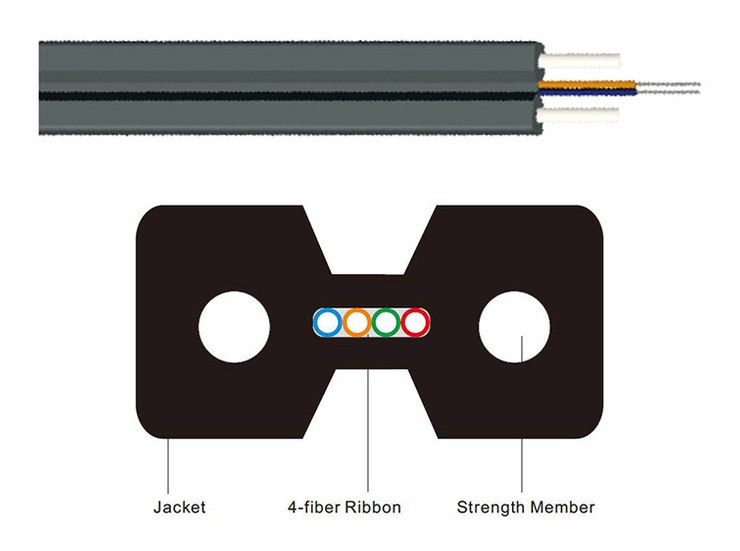
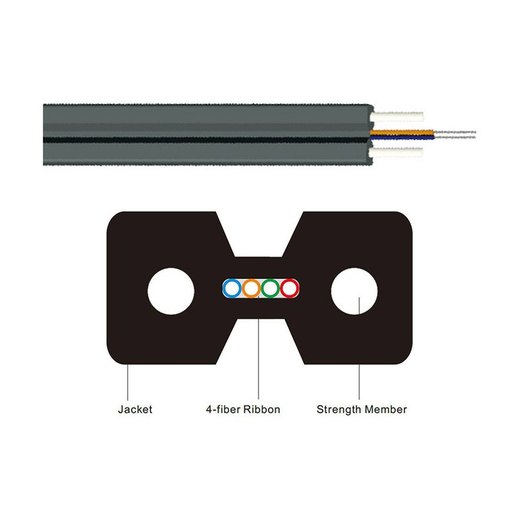
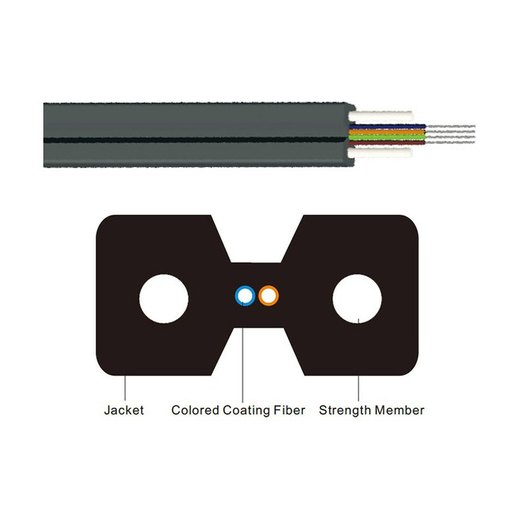
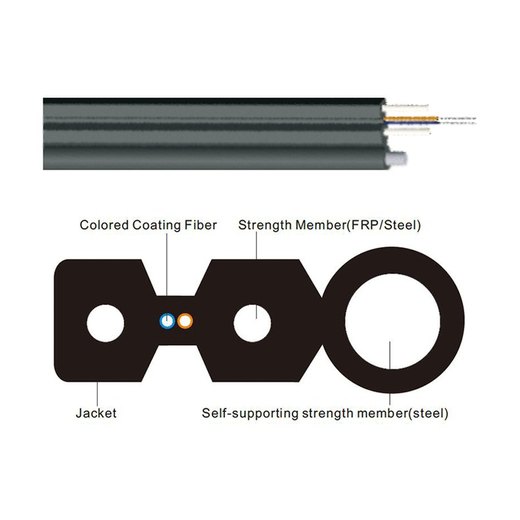
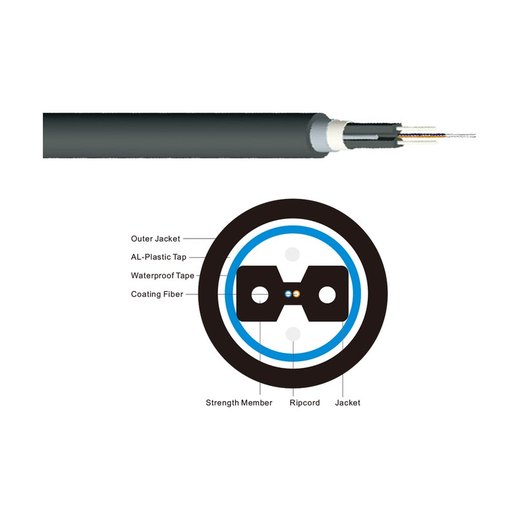
Most drop failures are construction-selection failures. The bow-type (butterfly) family has four members — click the version chips on the product page to see each construction's photo and cross-section:
Version Specs at a Glance
| Version | Profile | Fibers | Strength | Tensile | Use |
|---|---|---|---|---|---|
| V1 indoor | 3.0×2.0 mm flat | 1-2 | 2× FRP | 40/100 N | In-building, wall runs |
| V2 indoor 4F | 4.0×2.0 mm flat | 4 | 2× FRP or steel | 40/100 N | MDU risers, small business |
| V3 self-supporting | 5.2×2.0 mm + messenger | 1-4 | Steel messenger | 600 N | Pole→wall aerial ≤50 m |
| V4 waterproof | Ø~6.8 round, AL-plastic + tape | 1-4 | FRP/steel | 600 N | Buried/duct approach |
All versions use bend-insensitive G.657 fiber (A2 tolerates 10 mm radius, ~a pencil) in LSZH sheath, and all terminate identically at the subscriber end — one accessory kit across the plant. Chain versions along one route: V4 underground to the wall, V1 up the stairwell.
The Drop Kit: Tools & Consumables
- Drop clamps (wedge type for bow cable), hook brackets, stainless strapping
- Flat-cable clips 8×3 mm, UV-rated ties, wall grommets and silicone sealant
- Fiber stripper for 2×3 mm bow profile, Kevlar shears, VFL (visual fault locator)
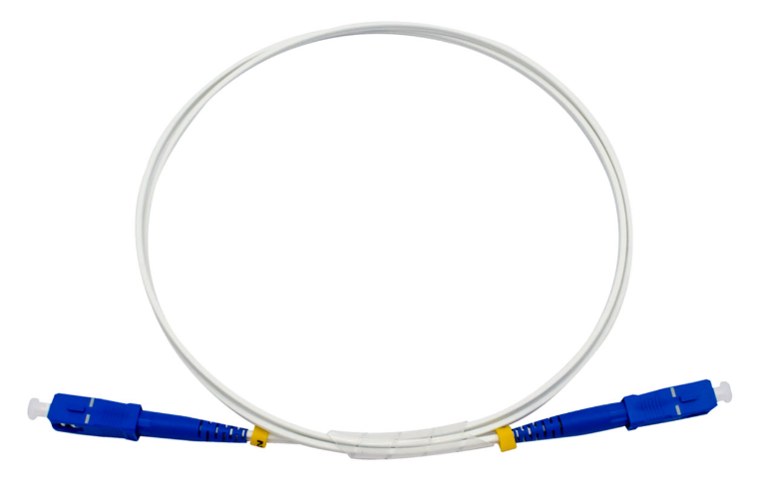
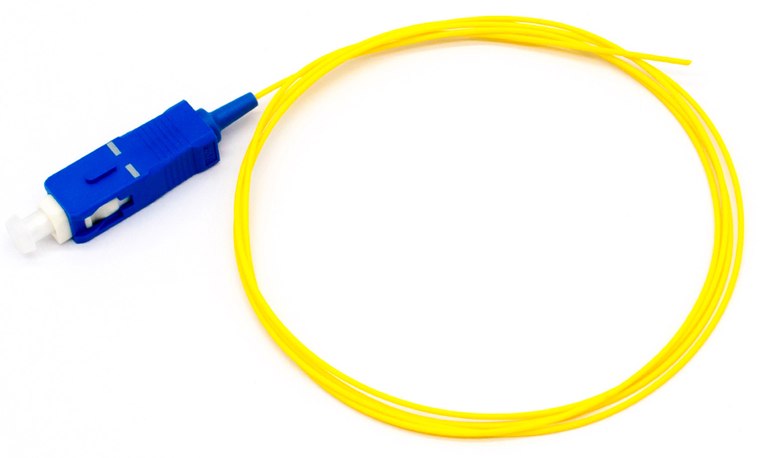
- Fusion splicer + SC/APC pigtails, or vetted fast connectors as fallback
- Power meter + light source; one pre-terminated drop cord as golden reference
Aerial Spans, Step by Step
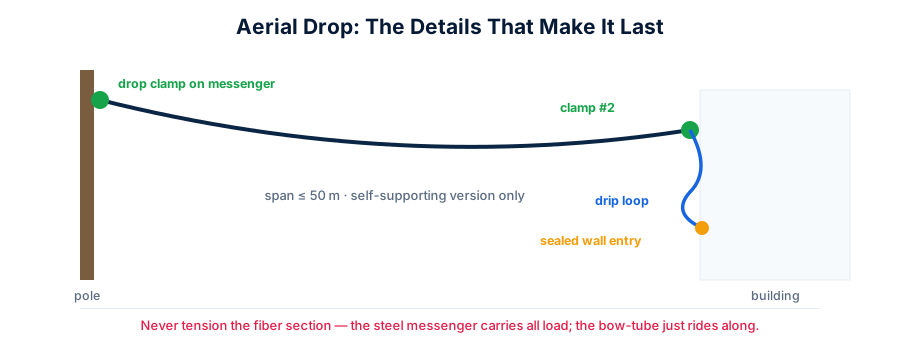
- Version 3 only. Flat indoor cable flown between buildings fatigues at the first fixing point within months — the #1 premature-failure cause we see in RMA photos.
- Span ≤50 m pole-to-wall. Longer or ice/wind-loaded spans move up to figure-8 cable with proper hardware.
- Clamp the messenger, never the fiber section. Wedge clamps grip the steel wire; the bow tube must hang free. Wrapping the whole profile around a hook crushes the fibers over time.
- Drip loop at the building, entry hole drilled sloping upward, sealed with silicone + grommet. Water follows cable with remarkable determination.
- Clearances per local code — typically ≥5.5 m over roads, ≥4 m footpaths; never share a bracket with power drops.
Wall & Indoor Routing
G.657A2 forgives 10 mm bends but not staples through the web: use flat-cable clips every 40-50 cm, round every corner (think "coin, not crease"), and sleeve any crossing of metal edges. Vertical MDU runs use V2 4-fiber up the riser with a small slack coil (Ø ≥60 mm) at each floor box — slack is what turns a future re-splice from a re-pull into a 10-minute job. LSZH is code in most jurisdictions for in-building runs; all FOT drop versions ship LSZH.
Termination: Fast Connector vs Splice
| Fast connector | Fusion + pigtail | |
|---|---|---|
| Typical loss | 0.3-0.5 dB | 0.02 splice + 0.2 connector |
| Reflectance | −40 dB class | −60 dB (APC) |
| Time per end | ~2 min | 5-8 min incl. tray |
| Cost per end | $1.5-3 consumable | ~$0.7 pigtail + machine amortization |
| 10-year reliability | Good (gel-dependent) | Best — it's glass |
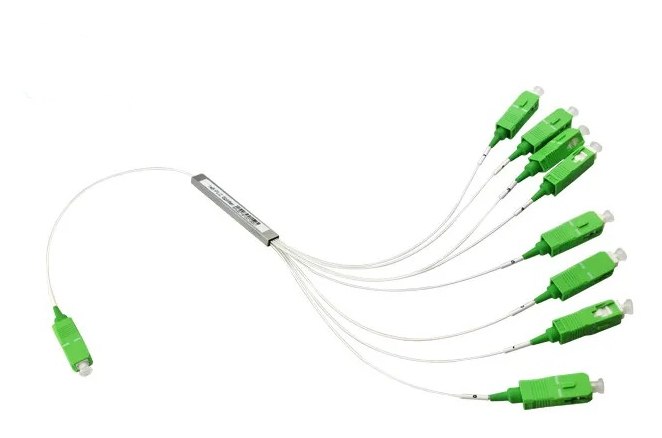
The volume-rollout verdict is one-sided: past a few hundred homes, fusion-spliced pigtails win on loss, reflectance and lifetime cost; keep fast connectors for repairs and one-off jobs. PON means APC everywhere at the drop (the reflection story) — green connectors, green splitter pigtails, no exceptions.
Acceptance Testing
| Measurement | Limit | Note |
|---|---|---|
| Drop loss, terminal→ONT @1310/1490 | ≤1.5 dB | Incl. two connectors |
| Full ODN loss, OLT→ONT | Per class (B+ ≤28 dB) | Splitter dominates; drop is the margin |
| ONT received power | −8 … −27 dBm (GPON B+) | Read from OLT — free telemetry |
| OTDR events (if shot) | No event >0.5 dB in drop | Bigger = crush point — find it now |
Record per-home results at turn-up. Six months later, that baseline is the difference between "the whole street degraded 1 dB — water in the terminal" and door-knocking with a meter.
The Five Most Common Field Faults
- Crushed at a tie/clip — over-tightened fixings flatten the bow tube. Fix: snug, never tight; the cable should rotate under light finger force.
- Stapled web penetration — invisible until rain; VFL glows red at the wound.
- Indoor cable flown outdoors — UV + fatigue; re-run with V3.
- Macro-bend at the wall entry — the 90° "around the brick" bend; drill the slope, use the loop.
- UPC-into-APC at the terminal — 4-6 dB instantly; color discipline (blue≠green) prevents it.