The short answer
High-speed optics have a power problem, and it has two components. The DSP inside every conventional module burns roughly half the module's power cleaning up the signal. And the ten to thirty centimetres of circuit board between the switch ASIC and the faceplate is lossy enough that the electronics at both ends work hard just to cross it.
Four approaches attack this. Two of them delete the DSP: LPO entirely, LRO on one side. Two of them shorten the board: CPO by putting the optics on the ASIC package, NPO by putting them close to it. They are not competing products so much as competing bets about which constraint binds first — and the honest answer is that all four will coexist for years.
What Is LPO?
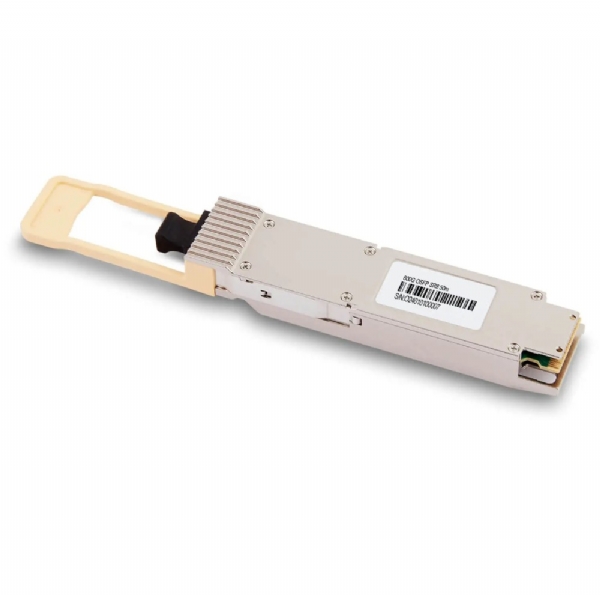
Linear pluggable optics removes the DSP completely. The host SerDes drives the optical front end through a purely analogue, linear path — no retiming, no digital regeneration, in either direction. The switch ASIC's own equalisation has to do the work the module's DSP used to do.
The saving is real: commonly 30 to 50 per cent of module power, plus tens of nanoseconds of latency in each direction. The cost is that signal integrity now has to be closed across host, module and fibre together. Without a DSP absorbing the differences between hosts, the module and the switch effectively have to be qualified as a pair. See LPO.
What Is LRO?
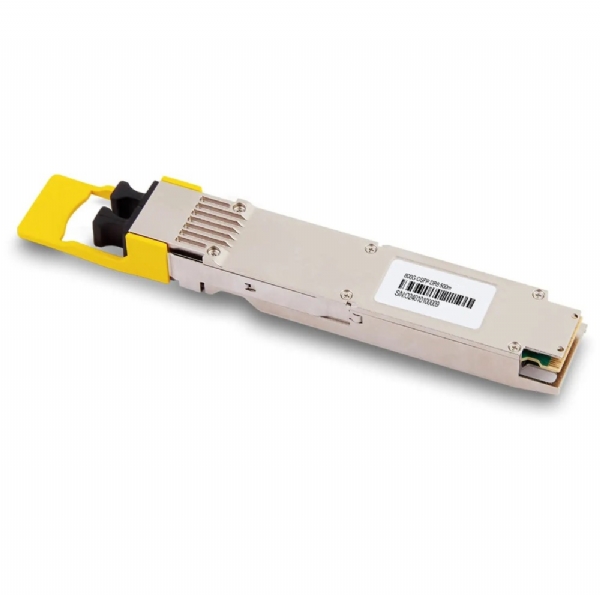
Linear receive optics removes the DSP from one direction only. The transmit path keeps its DSP, so the light launched into the fibre is still a clean retimed waveform that any compliant receiver can handle. The receive path is linear.
This is a deliberate compromise, and a well-chosen one: most of the interoperability difficulty with fully linear optics lives on the transmit side. Keeping the transmit DSP means an LRO module launches a signal a conventional DSP module at the far end will happily receive, which makes it deployable in mixed estates where LPO is not. The saving is smaller — roughly 20 to 30 per cent. See LRO.
What Is CPO?
Co-packaged optics keeps the DSP but eliminates the board. Optical engines are mounted on the same package substrate as the switch ASIC, millimetres away, and fibre carries the signal off the package. The long lossy electrical channel simply ceases to exist.
The power saving is the largest of the four, and it is the only approach that also solves faceplate density — at 102.4T there is not enough front panel for pluggables regardless of how efficient they are. The objection is serviceability: a failed pluggable is swapped in seconds by anyone, while a failed co-packaged engine is a switch-level repair. See CPO.
What Is NPO?
Near-packaged optics puts the engines on the same board as the ASIC, a few centimetres away, rather than on its substrate. The electrical channel is short enough to recover much of the benefit, but the engine stays a separate assembly that can be built, tested and in some designs replaced on its own.
It exists because co-packaging demands an advanced packaging supply chain that not every switch programme wants to bet on. NPO is the hedge: most of the gain, considerably less manufacturing risk. See NPO.
LPO vs LRO vs CPO vs NPO: Side by Side
The four differ on where the electronics sit and what you give up. Read the serviceability row first — for most operators it is the row that decides the argument.
| LPO | LRO | CPO | NPO | |
|---|---|---|---|---|
| What is removed | The DSP, both directions | The DSP, receive only | Nothing — the board is removed | Most of the board |
| Where the optics sit | Faceplate pluggable | Faceplate pluggable | On the ASIC package | On the board beside the ASIC |
| Power saving | 30–50% of module power | 20–30% | Largest of the four | Large, below CPO |
| Latency saving | Tens of ns each way | Tens of ns on receive | Small — DSP is retained | Small |
| Field-replaceable | Yes | Yes | No — switch-level repair | Sometimes, by assembly |
| Interoperability | Hardest — host and module qualified as a pair | Easier — clean transmit waveform | Vendor-integrated | Vendor-integrated |
| Solves faceplate density | No | No | Yes | Partly |
| Maturity | Shipping, limited qualification | Shipping | Demonstrations and first products | First products |
| Best fit | In-rack and in-row at 400G/800G | Same, with mixed vendors | 51.2T and 102.4T switches | High-density switches hedging on CPO |
One row deserves expanding: interoperability. A conventional DSP module works between any compliant host and any compliant fibre plant because the DSP isolates the two domains. Delete it and that isolation goes — whatever distortion your switch board introduces arrives at the laser. This is not a manufacturing problem, it is a systems problem, and it is why LPO deployments so far are single-vendor or jointly qualified rather than open-market.
The other thing worth saying plainly: none of these four changes your cabling. The fibre, the connectors and the reach classes are the same. Whatever happens at the switch end, an MPO trunk is still an MPO trunk.
Which One Should You Choose?
For in-rack and in-row links at 400G or 800G: LPO or LRO
This is where linear optics makes sense — short, well-characterised electrical channels and modest optical spans. If both ends of the qualification are within your control, or your switch vendor has qualified a specific module, LPO gives the bigger saving. If you buy from several vendors and cannot guarantee joint qualification, LRO is the safer version of the same idea. Work out what the saving is actually worth to you in the TCO calculator — at 16 W a port over three years, halving module power is a substantial number.
For long or uncontrolled channels: conventional DSP optics
Across a structured cabling plant, between equipment from different vendors, or anywhere nobody has characterised the electrical path end to end, keep the DSP. It exists to make links work under conditions you did not design, and that is worth more than the watts on any link that is not in a controlled environment.
For the largest switches: CPO, when it arrives for your platform
At 51.2T and above, and certainly at 102.4T, the faceplate physically runs out of room for pluggables. CPO is not an optimisation at that point, it is the only way to build the switch. The operational question to settle before committing is what your spares and repair model looks like when optics are no longer field-replaceable.
If you are specifying a platform today: ask about the roadmap
The useful question for a switch vendor is not 'do you support LPO' but 'what is your qualified module list, and what happens to it at 1.6T'. The answer tells you whether you are buying into an open market or a single-vendor one for the life of the platform.
Frequently Asked Questions
Is LPO the same as LRO?
No. LPO removes the DSP in both directions; LRO removes it only on receive and keeps a conventional retimed transmit path. LRO is meaningfully easier to deploy across vendors for exactly that reason, at the cost of a smaller saving.
Will CPO replace pluggable optics?
Not broadly, and not soon. It solves a problem that only the very largest switches have, and it does so by giving up field replaceability — which most operators value highly. The realistic outcome is co-packaging at the top of the range and pluggables, increasingly linear ones, everywhere else.
Does LPO work over long fibre spans?
It is aimed at short reaches — in-rack and in-row. Without a DSP regenerating the waveform there is less margin to spend on optical impairment, so the reach classes available in LPO are the short ones. For anything past a few hundred metres you want a conventional module.
What is XPO, and where does it fit?
XPO is an attempt to get CPO-like density while keeping a field-replaceable pluggable element, usually with an external laser source and a very-small-form-factor fibre connector. It is earlier than the other four and the terminology is still settling, but it is worth watching precisely because it addresses the serviceability objection.
Do any of these change what cable I buy?
No. Reach class and connector are set by the optical standard, not by where the electronics live. Your trunks and patch cords are unaffected.
The Parts We Build
Whichever way the switch end evolves, the fibre side does not — and that is the part we build and test for you.