MPO Cleaning and Inspection: The One Discipline That Prevents Most Optical Faults
Ask an experienced field engineer what causes optical link failures and you will get one answer before any other: dirt. Not bad modules, not bad fibre, not bad splices. Contamination on an end face, invisible without magnification, sitting between two cores that are supposed to be touching.
On a duplex LC that costs you one link. On an MPO it costs you twelve or sixteen at once, which is why parallel-optics plant demands a discipline that duplex plant could get away without.
Why This Is the Highest-Return Habit in Fibre Work
A particle a few microns across, parked on a nine-micron single-mode core, blocks a meaningful fraction of the light. It also does something worse: when you mate the connector, you press that particle into both end faces, so you now have two contaminated ferrules and possibly two scratched ones.
The economics are absurd in your favour. Inspection takes under a minute. The fault it prevents takes an engineer, a change window and often a site visit to find, because from the switch it looks exactly like a fibre problem, a module problem or a fabric problem depending on how it presents.
Reading an End Face: The Four Zones
IEC 61300-3-35 is the standard that turns "does it look clean" into a pass or fail. It divides the end face into concentric zones and specifies how many defects and scratches of what size are acceptable in each, because where a defect sits matters far more than how big it is.

The logic is simply optical: light travels in the core, so a defect there is directly in the path. A scratch on the outer contact area affects nothing except, at the margin, how well the ferrules seat. A probe that grades automatically removes the judgement call, which matters when the person inspecting has done it forty times that day.
Inspect, Clean, Inspect — In That Order
The sequence matters more than the products.
Inspect first. You cannot tell by looking at the outside, and you cannot tell by where the connector came from. A connector fresh from a sealed bag is not automatically clean — dust caps shed particles, and they are not a clean-room seal.
Clean only if it fails. Cleaning a clean ferrule is not free. A dry wipe can drag an existing particle across the core and convert a contamination problem into a permanent scratch.
Inspect again. This is the step people skip, and it is the one that catches the wipe that made things worse. If it fails twice, clean wet-to-dry and inspect a third time; if it still fails, the ferrule is damaged rather than dirty and the assembly needs replacing.
What Changes With MPO
Three things, and all three catch people out.
The blast radius. Twelve or sixteen fibres share one ferrule. One failure takes the whole port down, and if it is a trunk connector it can take a whole group of ports down.
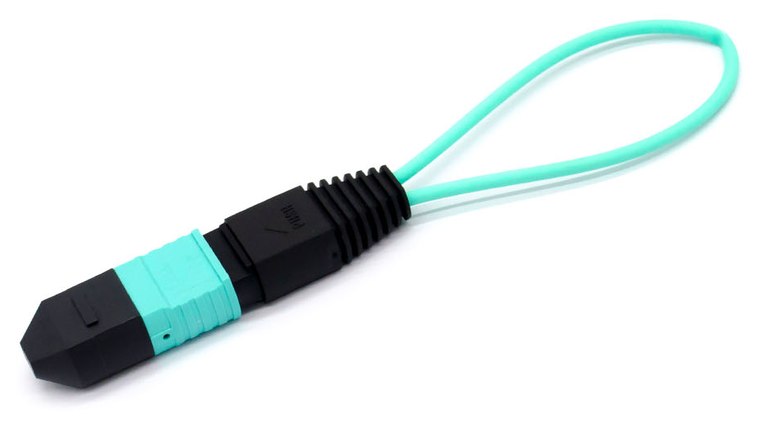
The guide-pin holes. A female MPO ferrule has two holes for the alignment pins, and they collect debris that a flat wipe never reaches. Cleaning an MPO with an LC tool does not work — you need a tip designed for the geometry.
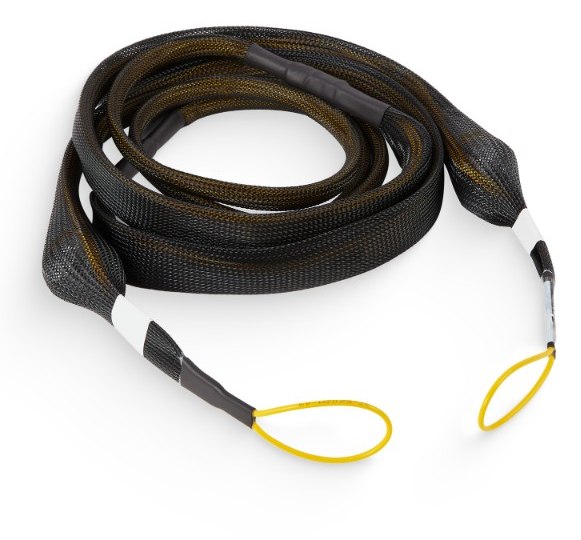
The cost of getting it wrong. An MPO trunk is not a five-dollar patch cord. Damaging a ferrule on a 144-fibre trunk that runs between floors is an expensive afternoon, and it happens when someone forces a mating that should have been inspected first.
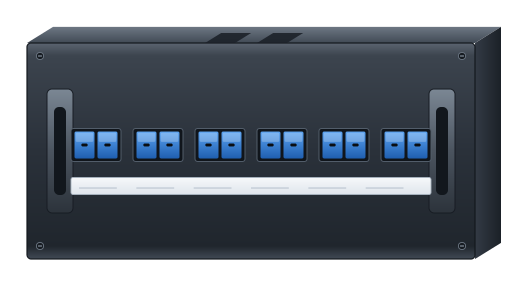
One related discipline worth adopting: fit shuttered adapters anywhere a port will sit unmated in a live room. An open MPO adapter collects dust straight onto the ferrule — see our adapter panels, which are shuttered as standard.
What You Actually Need
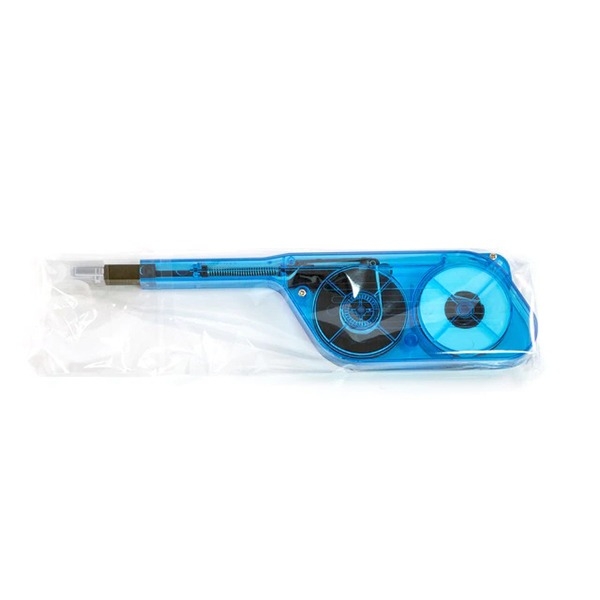
An inspection probe with an MPO tip, in both male and female variants, and a click-action cleaner sized for MPO. That is the minimum, and it is not expensive relative to a single avoided outage.
A probe with automated IEC 61300-3-35 grading is worth the premium if more than one person will use it, because it removes the interpretation step entirely. Our MPO cleaner and inspection kit bundles both, with tips for MPO male, MPO female, LC and SC bulkhead — the four you will actually meet.
What you should not do is improvise. Alcohol wipes and compressed air are how ferrules get damaged and how residue gets baked onto end faces.
FAQ
Do I need to clean brand-new connectors? Inspect them. Many will pass, some will not, and the ones that do not are the reason you inspect. A factory-terminated assembly is polished and capped in controlled conditions, but the cap travelled with it.
Does one cleaner handle both APC and UPC? Yes — a click cleaner wipes the whole end face and the polish angle is irrelevant. What matters is male versus female, because of the guide-pin holes. See APC vs UPC for the polish question itself.
How often should ports be re-inspected? Every time the connector is unmated and re-mated, without exception. A mated pair sitting undisturbed does not become contaminated; the act of opening it is what exposes it.
Can I see contamination without a scope? No. The particles that matter are a few microns across. If you can see it with the naked eye, the connector is far past dirty.